When we were working on The StormRiders, we had two Quantel Domino suites. Well, maybe I should talk about what kind of tech we had back in the 90s. During that period of time, most graphics workstations even the SGIs simply could not playback uncompressed image sequence (especially film resolution) in real-time. In order to watch the clip playing at it best quality in realtime, we needed something called Digital Disk Recorder (DDR). We would send the image sequence frame by frame to the DDR and then watch it playing in realtime. These DDRs actually converted the RGB pixels (24-bit storage) to chroma-subsampled ones, in so called YUV colorspace (4:2:2, 16-bit storage). With dedicated digital video hardware, the DDRs played nicely the clips in realtime. However, most common DDRs could only play back resolution like 720 x 480 (NTSC) or 720 x 576 (PAL).
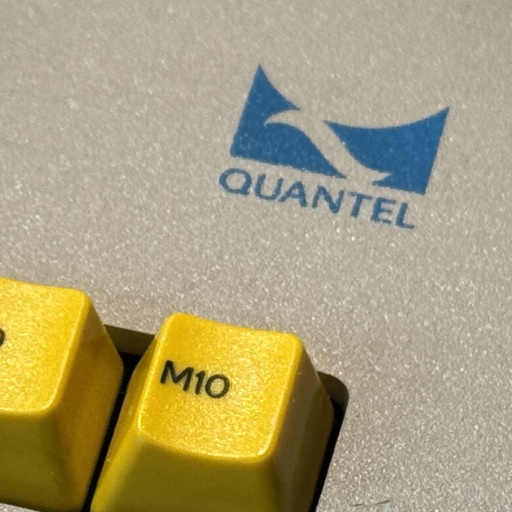
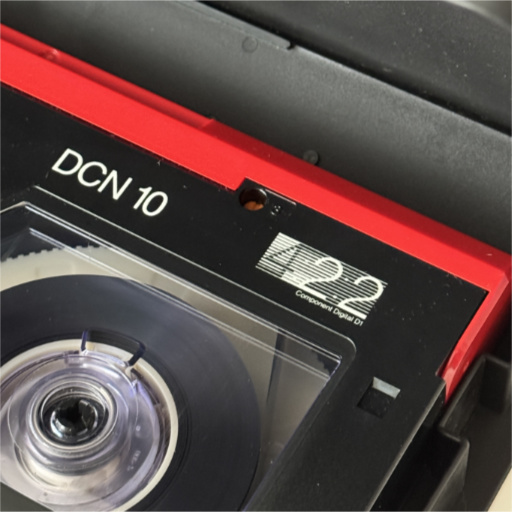
So, how did people work with Film-resolution materials ? Well, that explained why we had the Quantel Domino suites. Domino was a dedicated suite for digital film processing, it supported 2 frame sizes; they were the Big Canvas with resolution of 2880 x 2048 and the Small Canvas with resolution of 1440 x 1024. A complete Domino suite consisted of a film scanner, an artist workstation, a film recorder and of course a gigantic disk array which used D1 digital video tapes (As shown in this article’s feature image above, that’s a D1 tape) as backup (or data exchange). The suite had rigorus close-loop calibration tech which ensured that any round-trip would produce minimal information loss. By the way, it took 45 seconds to expose one Big Canvas image onto the negative. The Maths was if you have a sequence of 5 seconds, it then took 90 minutes to record them. This was the true ” bottleneck ” of our project. In short, no one would dare to interrupt or slow down anything happening in the Domino Suite.
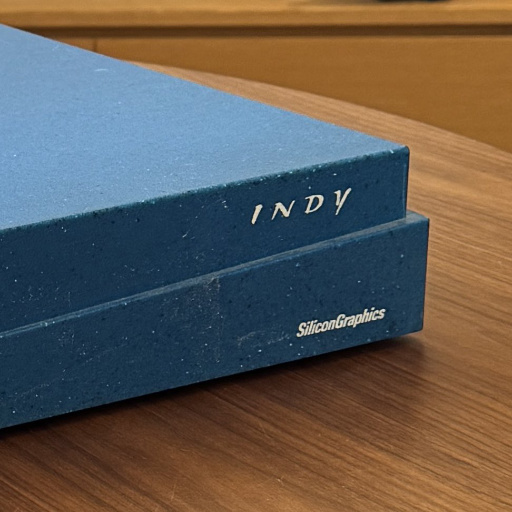
In Centro, our Domino suite had this SGI Indy which served as a gateway for exchanging RGB images I/O with the CG department. That Indy had a 10 Mbps (Mega-bit per second) network, yes you read it right and it was responsible for the RGB <-> YUV colorspace conversion processing too. The processing power of this Indy’s MIPS processor was not impressive and most PCs could easily match it in terms of raw processing. Obviously, this was the “second bottleneck” !
Thanks to the D1 digital video I/O supported by the Domino disk array, we developed our own RGB image I/O through this doorway. Quantel used an extremely clever strategy to store these high resolution film images, the format is called D16. Basically it divided a 2880 x 2048 image into 16 D1-resolution images (720 x 576). On a D1 digital video deck, you had that variable speed playback capability, so one would speed up the display speed, say 16x, you then watch the film materials in realtime with the D1 deck only without using the Domino suite ! Genius !
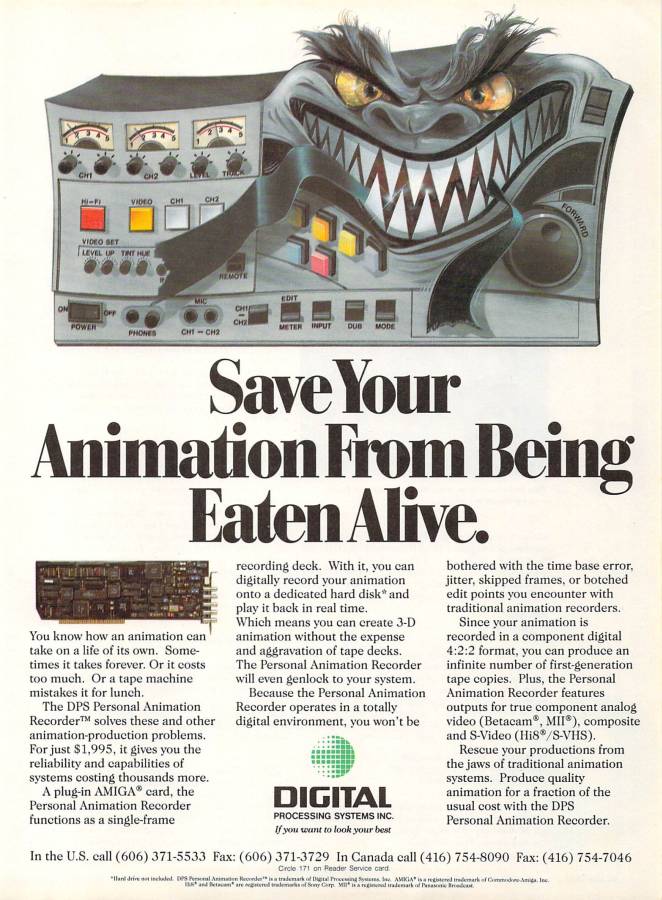
We reverse-engineered the D16 format and developed our own RGB <-> YUV pipeline using PC workstation (of course using 100Mbps network !) and a DPS Hollywood Digital Disk Recorder (an uncompressed DDR; DPS was the manufacturer of ” Personal Animation Recorder ” which allowed Motion-JPEG compressed video playback in real-time on Amiga and PC). This custom image gateway enabled more efficient image transfer between the Domino suite and the CG department without using any precious Domino resource. This custom gateway won a Hong Kong IT Excellence Award.
This image gateway was an essential component of Centro’s film VFX pipeline that contributed to many other film projects come after The StormRiders.