While I was working on ‘Warriors of Future’, I was aware that two ‘quality of life’ tools could be useful for the relatively less technical lighting artists.
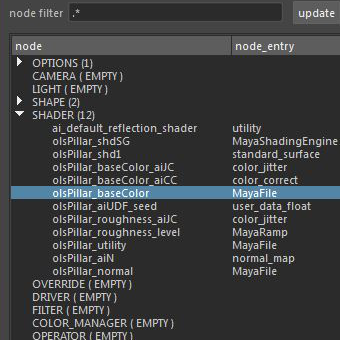
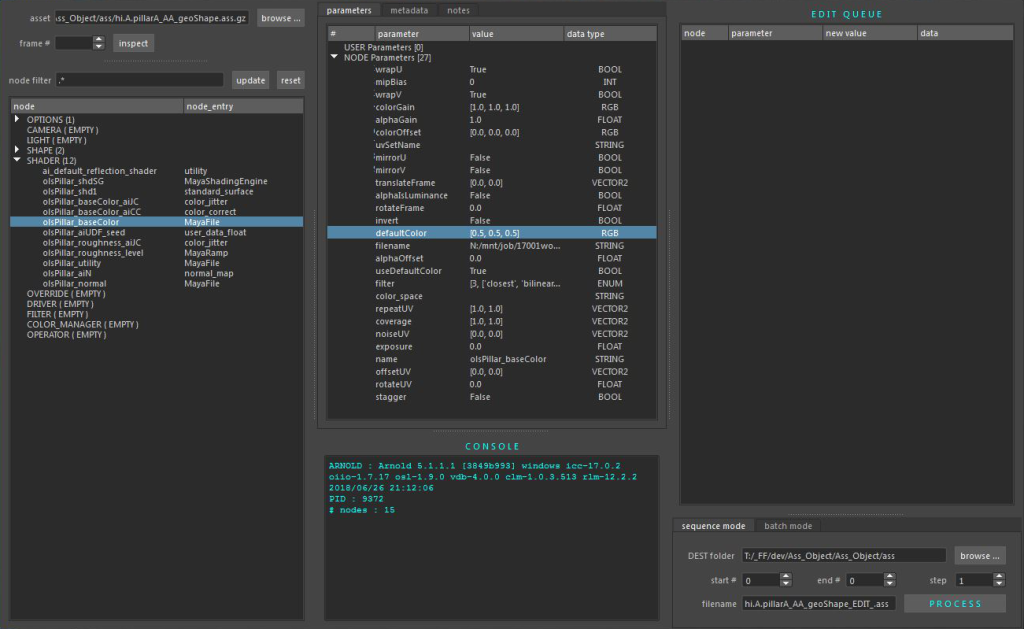
The first one is named Nano. Back in the old days, it was pretty standard that we converted various DCC scenes into PRMan standard .rib sequence for the final frame rendering. We exported ASCII .rib when we knew last minute tweaking might be necessary because it allowed lighters to edit directly the scene without opening the DCC apps (it could be extremely painful when opening those massive scenes as they lighted in Maya). Inspired by this practice, I designed and developed this friendly app (using Arnold API and PySide2, standalone or as a Maya plug-in) which allows artists to tweak exported Arnold .ass scene files. This is especially useful for editing those render-time evaluation parameters and/or render settings. It offers both scene file sequence editing or batch mode (multiple sequences) editing. On the other hand, I often rely on Nano to inspect and debug scenes.
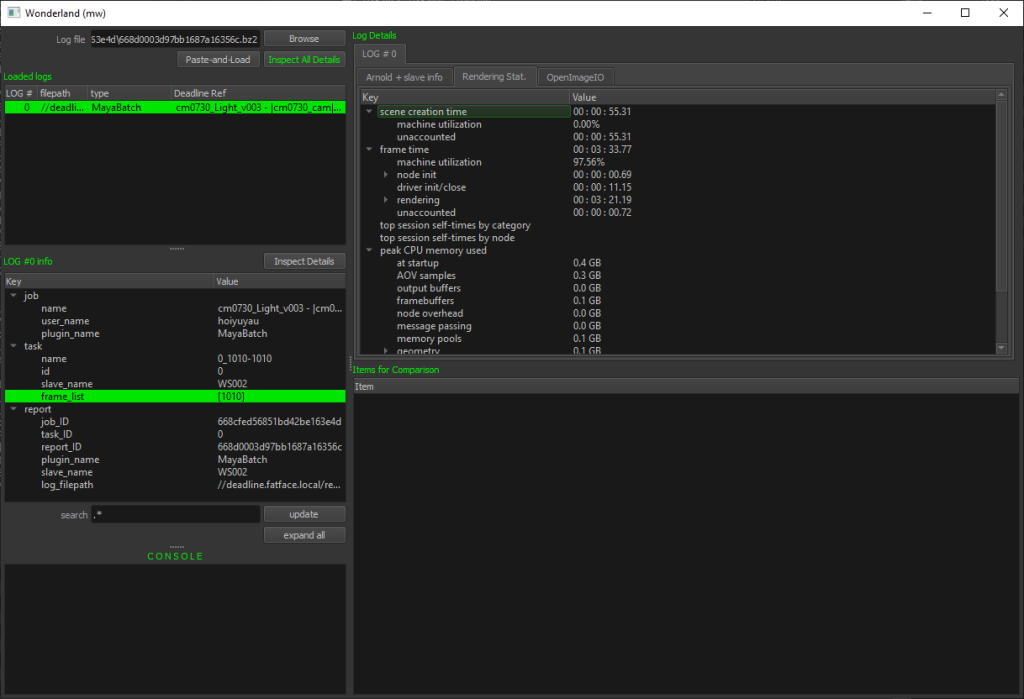
The sceond app is named ‘Wonderland’ (see below). As most lighters would not want to read the rendering logs; this is not hard to understand because these logs are often incredibly verbose and difficult to understand if you are not a renderer developer. This app categorizes the rendering log nicely into easy-to-read sections with a friendly GUI and it also includes a logs comparison function for rendering time optimization. It was embeddeded into the Deadline GUI, so lighters can simply right-click and launch this app quickly. In fact, I believe it has an educational use too such as showing how the texture LOD was used during rendering.